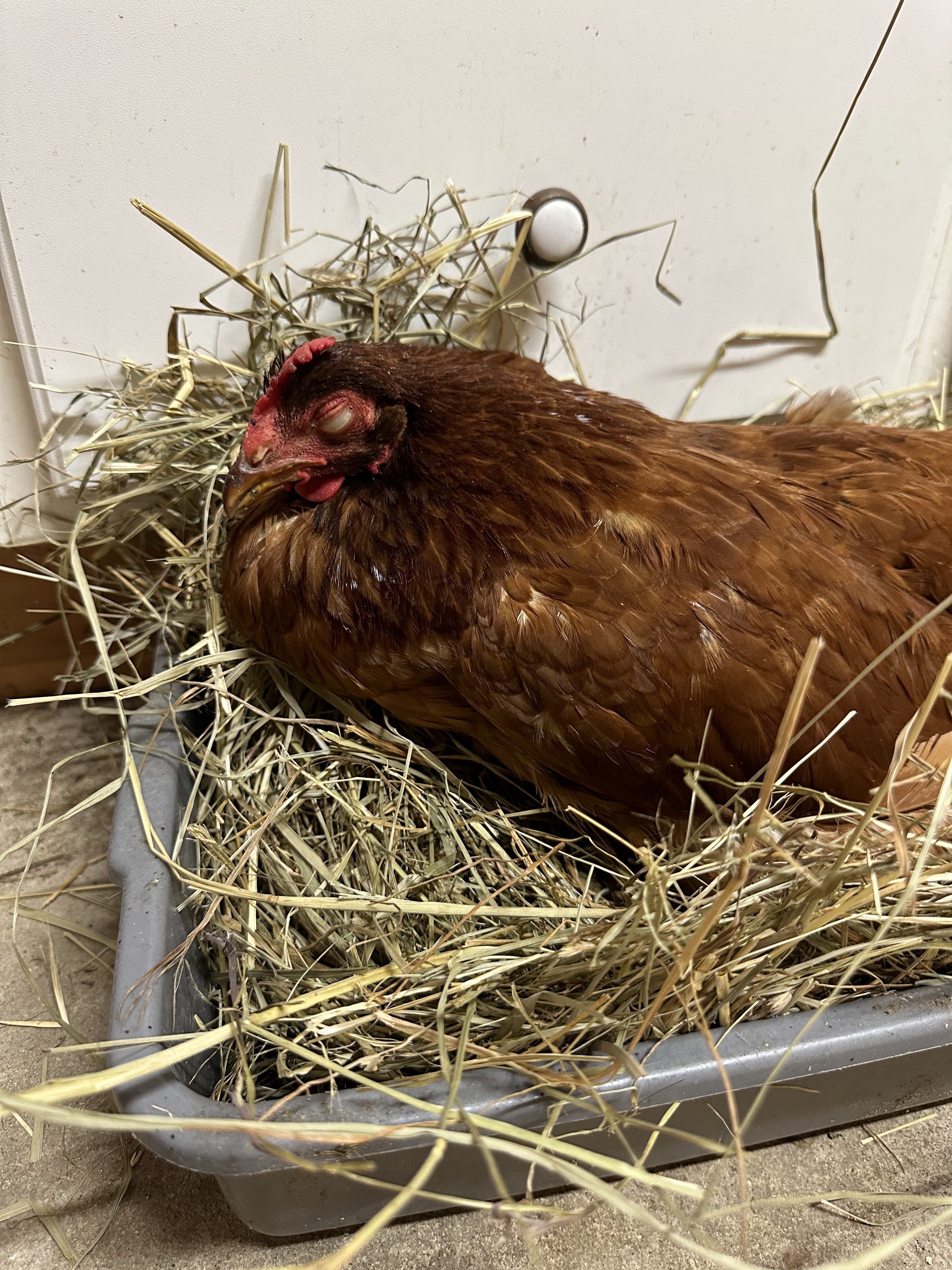
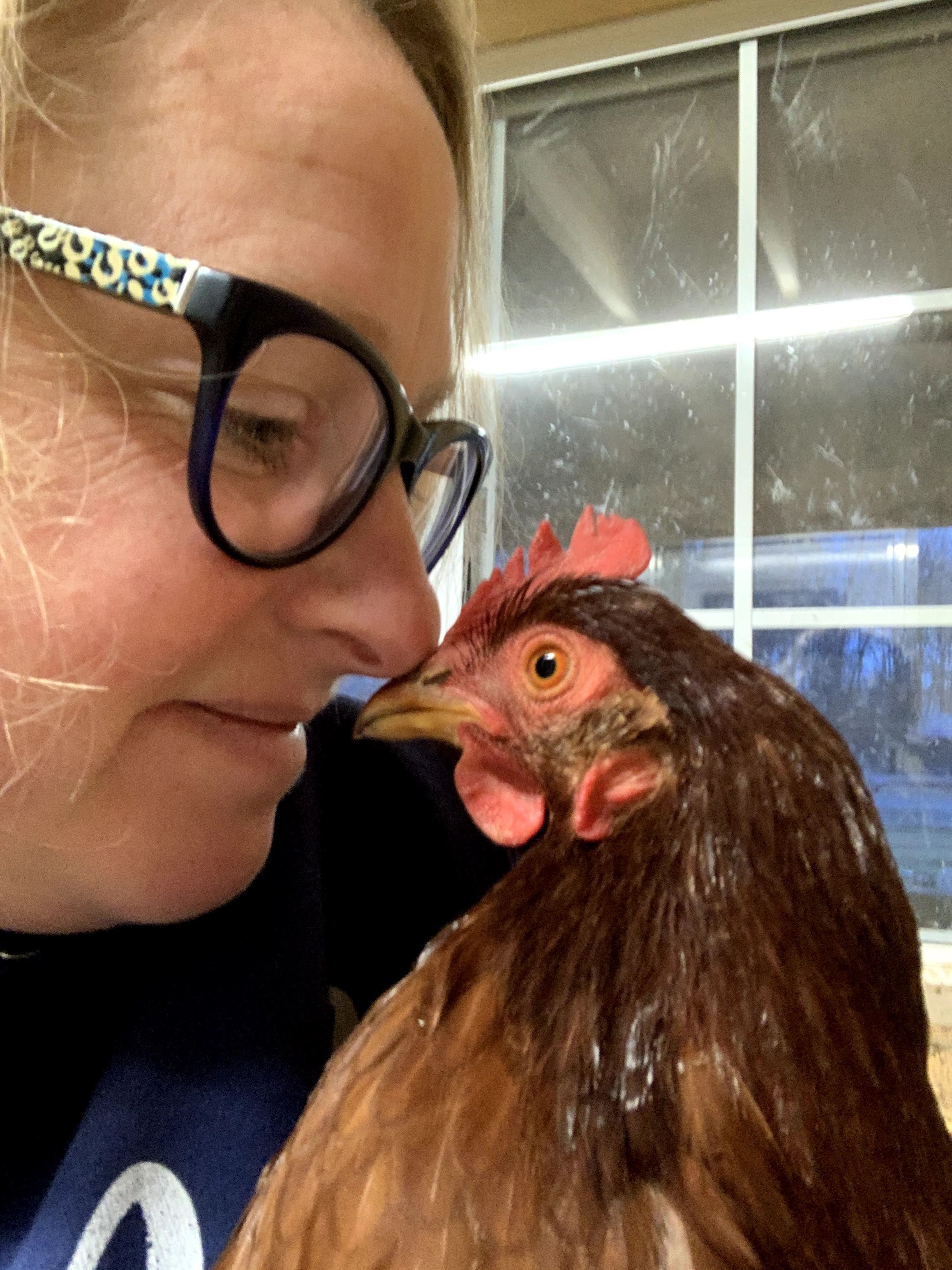
My favorite chicken, and a favorite among many who visit Dragonfly Farm, was Chili Pepper, my Rhode Island Red from my very first batch of chicks. She was the sweetest chicken. She would tug on shirt sleeves or pant legs to get me, and visitors, to pick her up and snuggle her. She would bury her face/beak into my shoulder or hair for a nice long snuggle.
We almost lost her when she wasn’t very old, with a blocked crop. We fed her Greek yogurt and she was good as new within 48 hours. She has fallen ill/lethargic a few times since the summer of 2020, but she always perked back up after some yogurt. This summer, right before our vacation, she started to seem not like herself, and when she didn’t even take yogurt, I knew she was not well.
I separated her from the other chickens, gave her some time in her own space, snuggled her, and tried to make her comfortable. I came out one morning and she had passed away in her sleep. She was so sweet. I cried for the loss of her. I was glad, however, that she passed away while I was home and not a week later when we had a pet sitter. I got to snuggle a few last times and tell her how special she was.
The title sounds so ominous! Luckily, no living things were harmed for the posting of this blog. We have felt some of Mother Nature’s wrath this growing season.
First, we had Japanese beetles. Now, mind you, they come every year. I know it’s the grubs in the ground, but I try (and try to get my husband) not to spray anything. I have been researching things to treat with that won’t harm the environment/my bees, etc, like nematodes. But so far, my best weapons are when the chickens are free-ranging and sneak into the landscaping, trashing all of the mulch beds. It is an awful mess but boy are they happy. Normally we do not have the arrival of the beetles until July 4th and then we have them for two weeks. This year they were here for two weeks before July 4th and then ANOTHER week after. They made our plants look either black, crunchy, and brown, or like lace covered in holes. I would go out on “beetle hunts” at least twice a day squishing them or putting them in buckets of water. I read that you should not use the bag traps because that attracts more bugs, but I was getting quite frustrated. Then I read about dumping those bags into buckets of water for your chickens. I tried this and the chickens devoured the floating bugs within minutes. It was oddly satisfying. 🙂 You can see an Instagram video of it here
We then headed out on a vacation that took a little over a week. While on vacation we got videos and pictures from our petsitters that a lovely doe had found her way into our fenced garden and discovered that she could deftly leap over the 4-foot fence. See here. The deer have also discovered that they don’t need to get zapped by the electric fence, they can just work their way around to the inside of my cut flower garden and nibble away. This has greatly limited the availability of zinnias in my flower selling at the farm stand.
We have also had rabbits, groundhogs, a lack of rain, and then one night of 4 inches of rain, so there has been a little bit of everything.
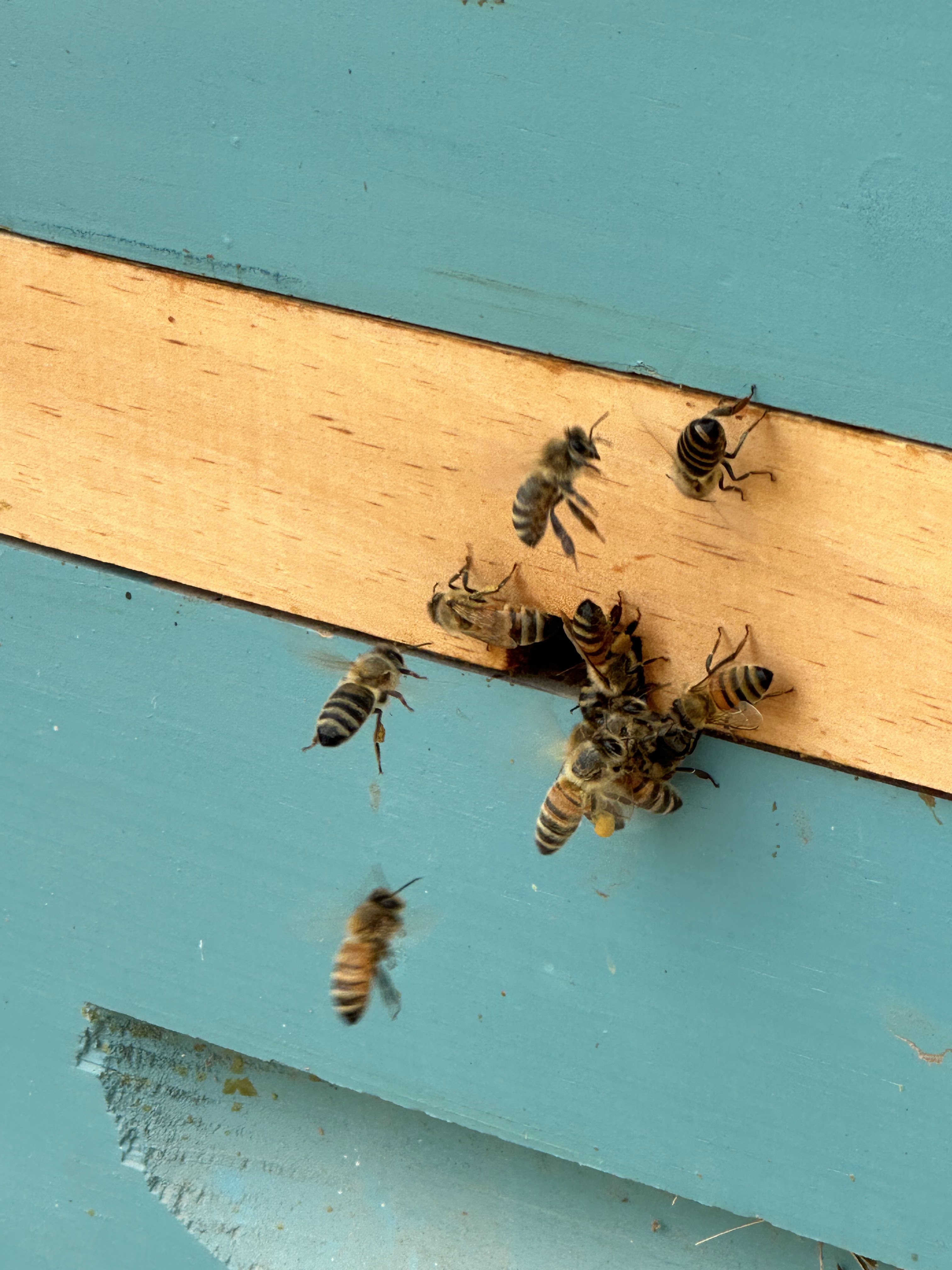
However, there has been some lovely news. We have three new hives up and running after losing our productive beehive to the weird winter weather last winter. We received one hive from a friend who had a hive split and they snagged the swarm for us, and then two nucs (nucleus colonies) that we ordered, picked up, and settled in early June. We came home to find last week that our inspection had taken place and the inspector from The Ohio Department of Agriculture found that we had no mites, beetles, moths, etc, and that the hives were clean and in great shape! It is nice to know that the hard work of getting them settled, checking them for a healthy brood and an active queen, and adding frames to keep them happy is paying off!
In 2020 I began to think about the stress my job was causing. I began to think about what I would do next. Did I want to go out and get my teaching license renewed and go back to teaching? That didn’t seem like the right fit at that time. Then, one evening we were watching Floret on the Discovery Network and, after growing plants, gardening, and knowing how much I loved it, I thought I’d like to try growing flowers for cutting and selling. I decided to stay home and garden and farm.
I took Floret’s online workshop, gave notice at my job, and purchased some seeds. I got books and read, planned, and started those seeds in my basement. I bought grow lights and heat mats so my plants could be happy indoors. After a few attempts at getting watering just right, which plants wanted heat mats and which didn’t, and getting my succession plan in place, I got little seedlings/sprouts! I watered and tended all winter.
When spring arrived, I put the trays of seedlings outside on our patio to “harden” or to get used to the weather, without being in it directly. After they had been out for two weeks, I planted them in their “forever home”. The next day I came out to check on them and there were goose footprints in the soil. The seedlings were either strewn about or completely missing. The Canadian geese had taste-tested my seedlings! They ate the ones they liked and dropped the others to die on the ground. I was so frustrated!
Next, I ordered “antique mums”. I thought they were lovely and they came as settled seedlings/plants. I ordered ten and planted them. A week later we had the worst spring rains we had experienced up to that point. It rained almost every day for two weeks. My mums were in standing water. They were not thrilled and all died.
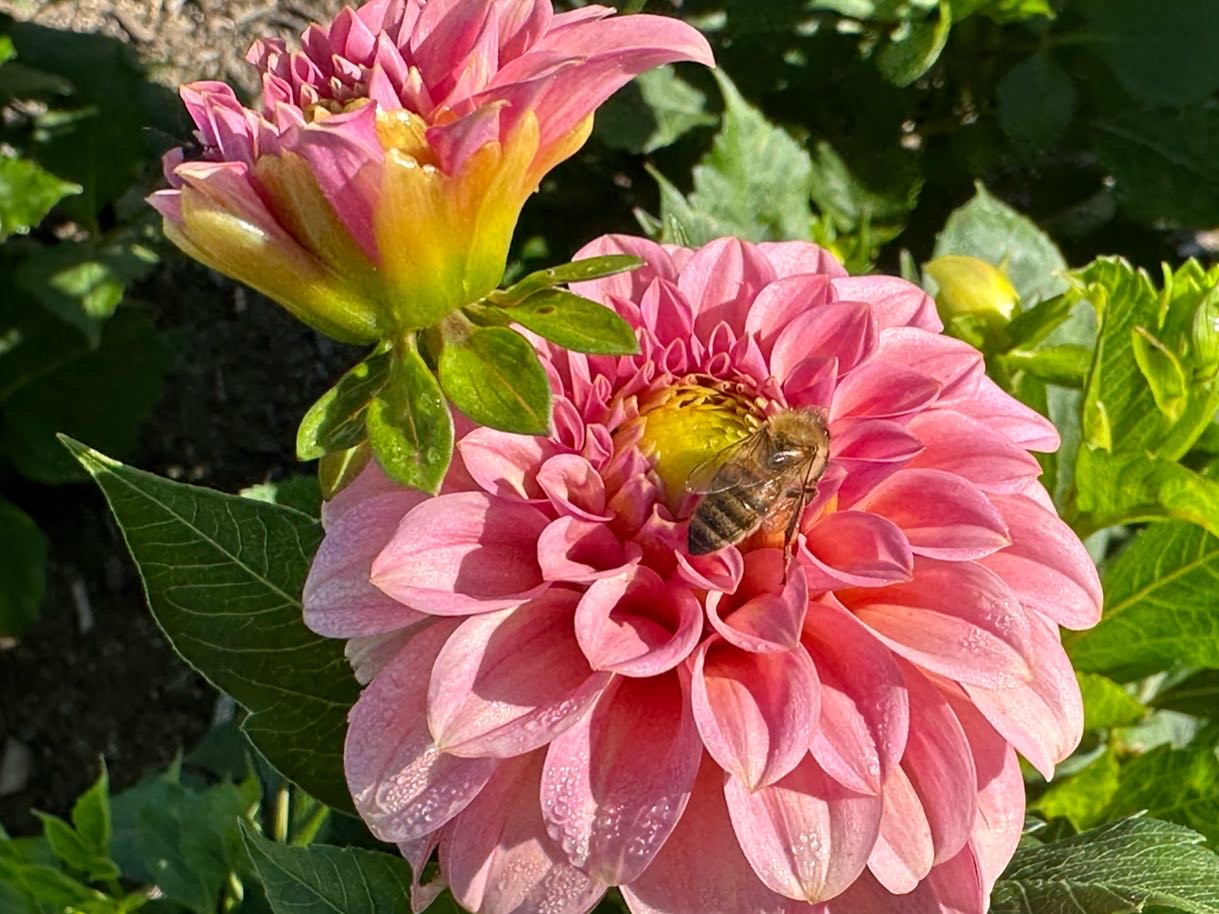
Dahlias were the next to be planted. They grew wonderfully! Those tubers worked so hard, until one day, we had buds and early blooms! Dahlias and Zinnias do not continue to open once cut, unlike a rose, for example, which will continue to open and bloom in the vase, so you have to cut them at just the right time. One day we had several blooms that were just about right. I set out the next day to cut them, quite excited! However, I got to the patch of dahlias and found that our deer neighbors found them just right, as well, and ate the blooms of all of them.
Our first year did not feel like a success. It felt like failure after failure. I was down and frustrated and thought I had made a terrible choice. I sulked and watched the social media of successful flower growers. I rewatched my Floret online workshop and noted that the proprietor, Erin, said that she, too, had lost plants- hundreds if not thousands over the years, and it was all part of the learning process. That helped take some of the sting off. I resolved to make notes and plan changes for the next growing season!
Last year in the farm stand we sold honey from our beehives at Dragonfly Farm. We ended up harvesting about 7 gallons. We love having the hives and the honey for friends, neighbors, and customers, so I wanted to post about our journey as beekeepers thus far.
When we first got started on the farm, the pandemic was underway. Due to the stay-at-home restrictions, our local conservatory, which is about thirty minutes from us, had its beekeeper certification classes online, instead of the in person classes they held before the pandemic. This saved us hours of driving to the conservatory after a workday to learn about beekeeping. We could just stay in our offices at home to attend the classes. We had reading assignments and I took copious notes. Once we completed the class and felt prepared, we ordered our first two nucs. A nuc is a nucleus colony including five frames, a queen, and a small nucleus of bees to get a hive started.
We brought them home in the spring of 2021 and got started. Our beekeeping group gave us the contact information for our “bee mentor” and she came and took a look to make sure we were set up properly to get started. We kept the hives alive, checking on them weekly, and feeding them when there was less pollen in our environment as summer ended. The weather cooled and we thought we had plenty of provisions for them. However, we lost both hives in the cold winter.
We started again the next spring, in 2022. We started with just one hive, to restart. We froze the frames we had from the previous hives to make sure they were healthy, but could also give a good start to our next group. We ordered another nuc. They started off great. We put insulation on them in the winter, and they survived. The bees were so healthy that early in the spring of 2023 a swarm split off. We caught it and started a second hive. We ended up losing our original hive later. However, the newer group was so healthy, and had so much honey from the group before, that we collected honey from them twice, once in spring and oce in summer. Then we left plenty for them to have for their winter food. We used the wax to make lip balm, create some fire starters, and candles in orange peels, and sold honey in a variety of sizes.
We went into the winter with one strong hive. We insulated it, provided food for them, and thought they should survive the winter. We had a warm spell and I checked on them. They were doing great. Then we had about two weeks of a cold snap and when I checked on them afterward, they were all dead. They still had plenty of food, so we aren’t sure what happened to them. They should have been warm enough and had sufficient food supply. My heart was completely broken to open it and find them gone.
We took apart the hives, thoroughly cleaned the pieces and are ready for some new bees. We have ordered two nucs for this spring, spring 2024, and we are hoping to get it right this time. Wings crossed!
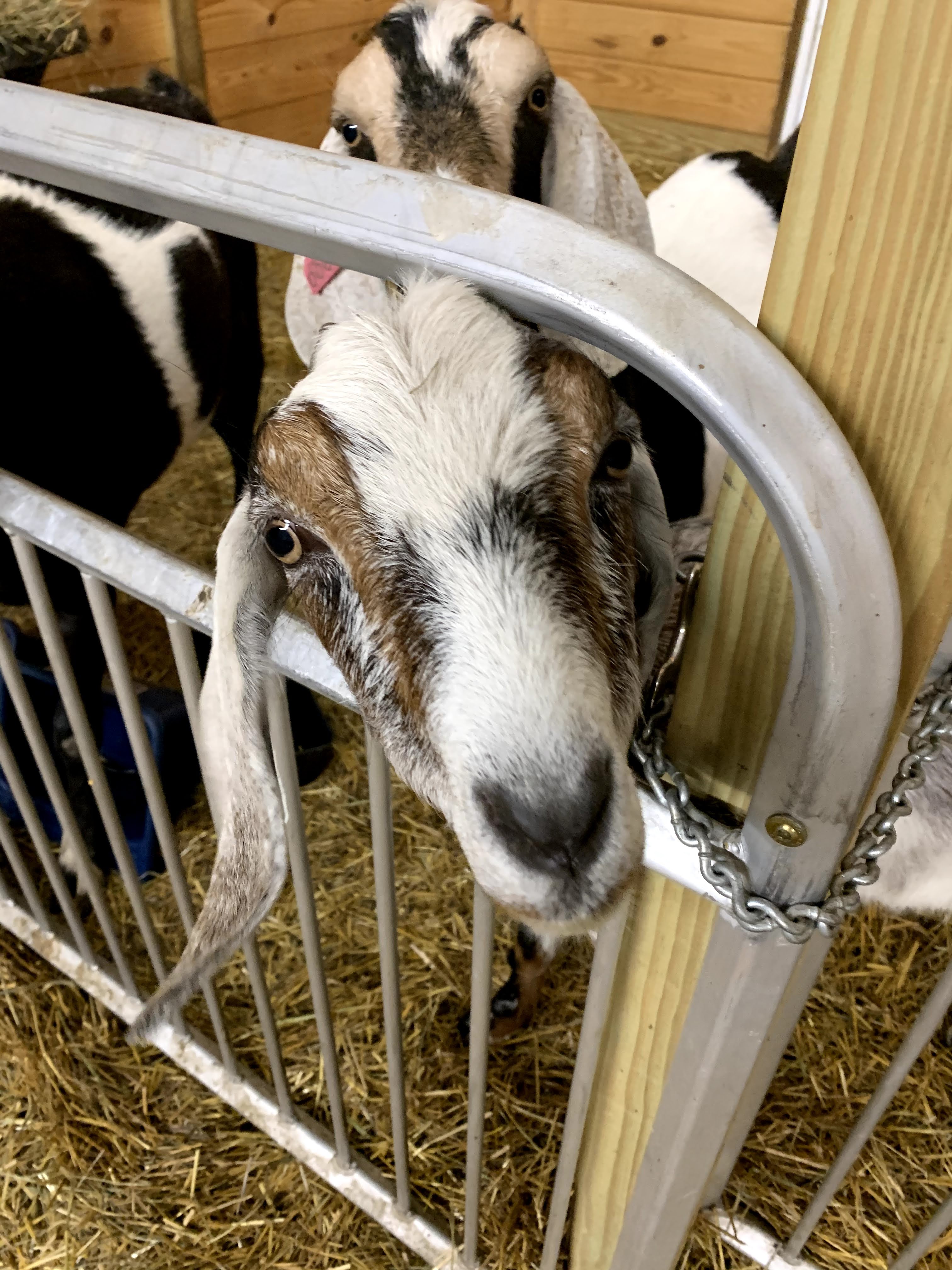
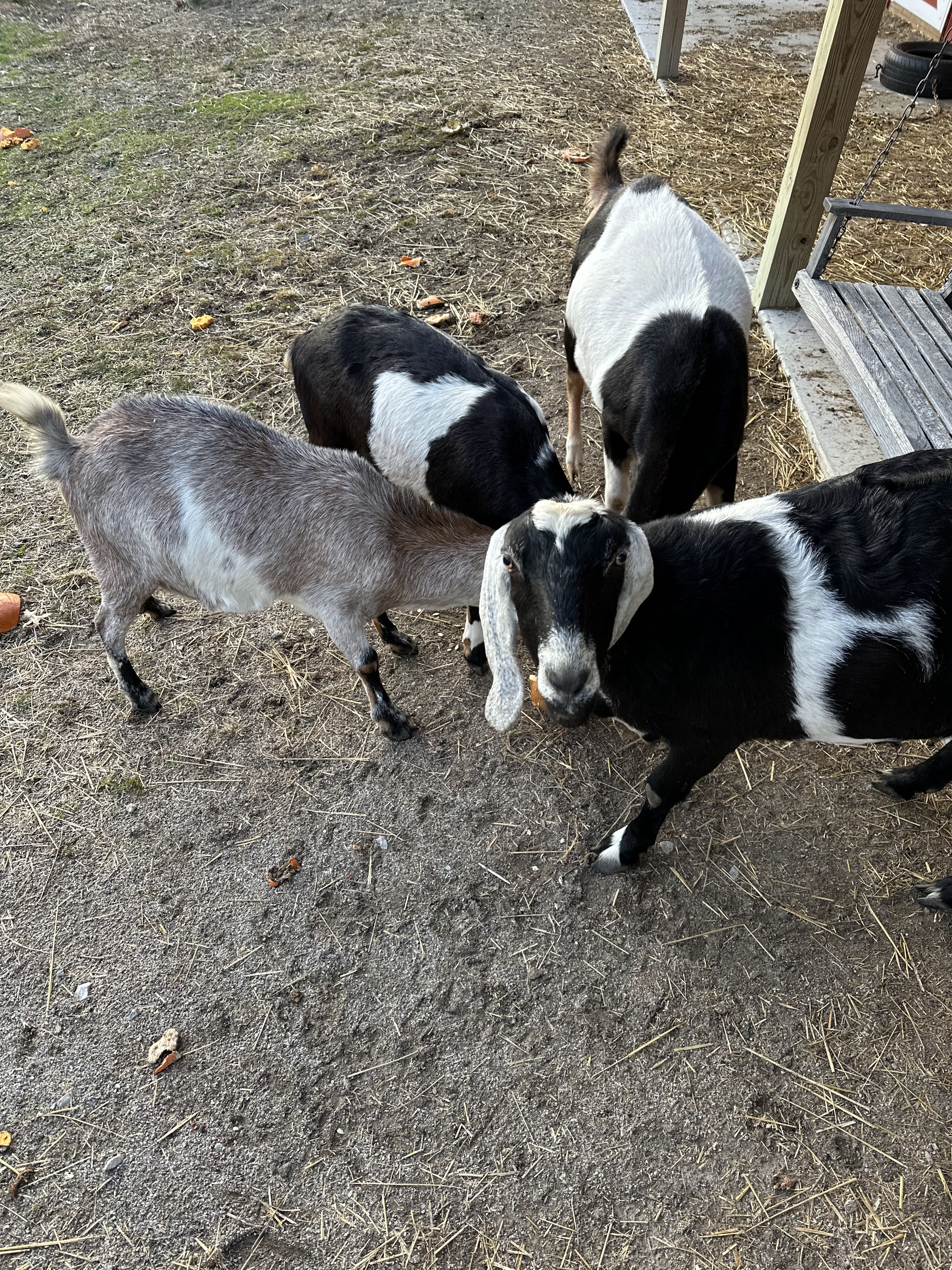
When we finished the big barn on our property we wondered what to fill it with! We knew we wanted to start with chicks, and we did, but then what was to be next? We narrowed it down to goats or sheep. We have some relatives who raise goats (at Clark’s LMH Farm) and they recommended goats due to their unique personalities. I pictured small goats in my head, as in hold in your arms-sized goats. We got Nubian goats, with our two males weighing in around 200lbs!
The first round of goats we got totaled four: two newly weaned kids and two one-year-olds. We got a male and a female of each age (1 and just weaned), loaded them into our mini-van (you should have seen the stares from cars beside us!), and drove the three hours back to our farm. We named them after plants: Clover, Lotus, Lily, and Sunny. Clover behaves like a large dog, even stealing a lick on the cheek! Sunny likes my husband the best, often looking around me to see if he has come to visit, Lotus likes to try to head-butt anyone who will play, and Lily was our shyest girl for a long time. She has come out of her shell since!
No one at Dragonfly Farm had any experience with goats so we had some research and learning ahead of us! The first thing we did not know was that goats require a dewormer medicine when their worm/parasite load gets too high. Our Sunny girl had some problems requiring her to be in the animal hospital overnight receiving a blood transfusion and some medicine. Luckily we got her there in time and she is alive and well.
The next summer, after Sunny’s incident, we learned another lesson: withered male goats aren’t supposed to have too much grain as it can cause stones that stop them from going to the bathroom, which could cause their bladder to burst. Clover is large and a treat hog, so he had too much grain, causing a stone. The vet said to bring him immediately, and we loaded him into our van to take him to the hospital. Luckily the stone dislodged itself and all was well eventually.
The first winter, when I was just beginning to jump on the learning curve, I bought “goat coats” for them to wear and keep warm. They lasted all of two days before they got caught on things, ripped the straps, and dragged them around the barnyard. Since then I have learned that goats get a thick coat during the winter so they didn’t need my fancy purple and blue blanket coats! We do increase the amount of straw in their stall for warmer bedding, and hay for them to eat since there isn’t much outside for them to eat.
The spring brings lots of work like shoveling out their stall, but the compost we get out of it is worth it. It provides a nice rich compost that we then add to our garden!
Our goats bring so much joy and we have learned many interesting facts, like goats’ pupils are sideways so that their eyes let more light in, as well as more peripheral vision so they can see if prey animals are coming. The goats only have top and bottom teeth in the back. In the front, they only have a set of bottom teeth and a rough dental pad on the top.
In September 2022, my cousin had two older female goats who needed a new home. I asked my husband what he thought and he said, “What’s two more?” We welcomed Hope and Faith to our little herd, and four became six.
All six are the sweetest pets. They come running whenever they hear our voices and their favorite things to eat are pine trees (we give them our Christmas trees and they eat the needles and the bark!) and poison ivy. I didn’t know how much they loved poison ivy until one day my cheek began to itch. The oils get on the goats’ coats and then, when you “snuggle” the goats, you may get that poison ivy oil on your skin. Not a good lesson to learn!
Now they are spoiled and lazy, laying in the sun, and yelling, “Mooooom” or something that sounds like it whenever they see someone outside in hopes of treats!
We have enjoyed every goat here on Dragonfly Farm and, even though we had a lot to learn, they have become just like our other pets: a big part of our family.
Our first summer, after our first flock had become adults, we learned from a friend that a friend of hers had posted “free chickens for friends or food”. So, we went and picked up four black Austrolorps-big black hens. They were “maybe 3-5 years old” when we got them and they were done laying eggs. We called them our “Golden Girls” since they came here to retire together. Some of our first flock of hens were mean to the “Golden Girls”, pulling out head feathers, and such, so we made them a separate coop. They are very sweet and have seemed happy in their home for almost four years, all except Sophia who passed away in her sleep this winter.
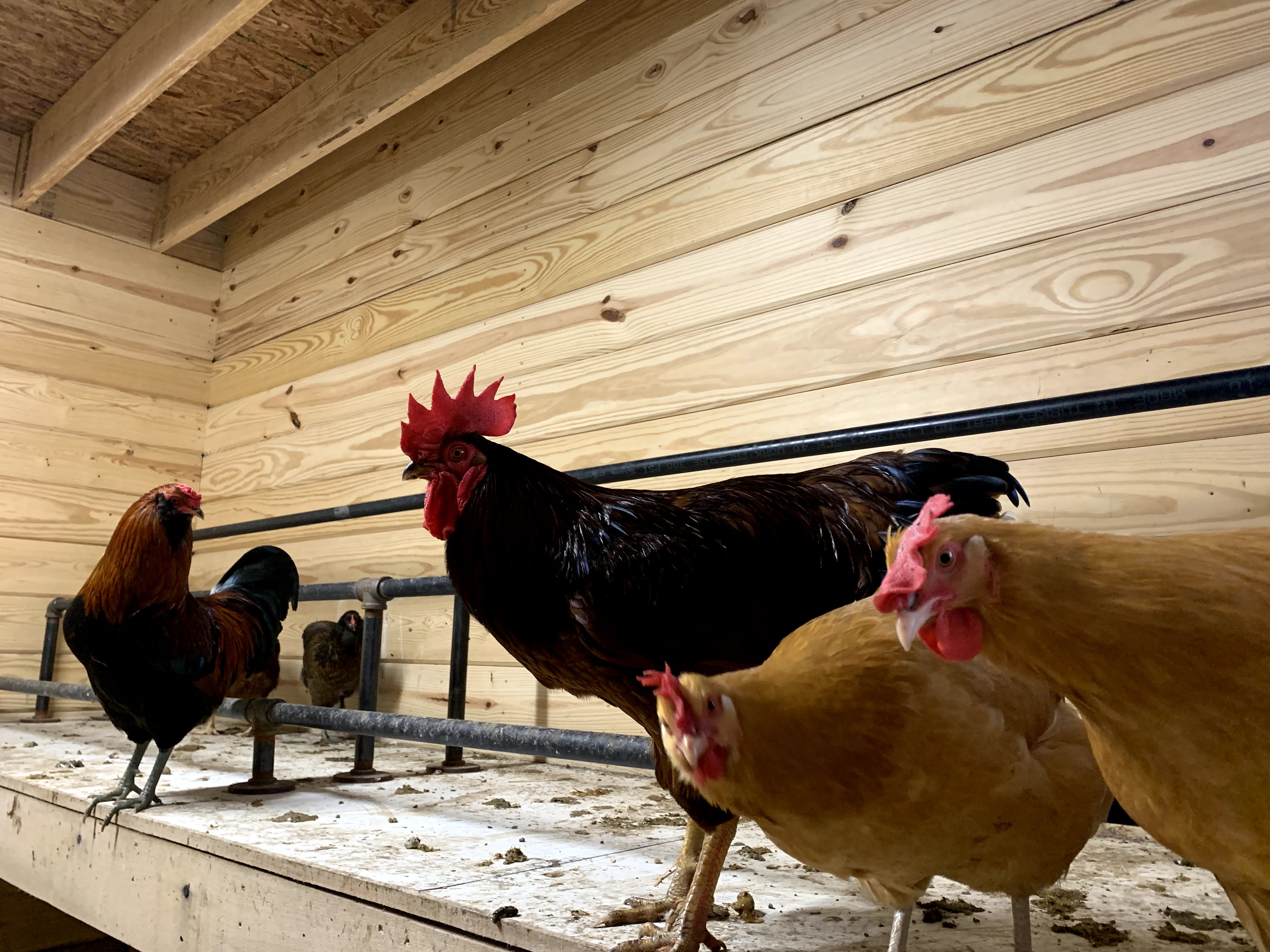
One of our roosters from our first flock, Cinnamon, was the perfect fit for the Golden Girl hens. They didn’t mind his crankiness too much. After Cinnamon had moved in with the Golden Girls, we had one other hen who kept trying to get out of the big coop and get into Cinnamon’s flock. Her name is Sesame. They had a nice flock of six until Sophia’s passing. Now they are a sweet flock of five, well all except Cinnamon; he isn’t very sweet.
We got another batch of chickens in the spring of 2021. We got another rooster in that flock of nine. Luckily a friend of ours needed a rooster, so they got Cayenne. Last summer we ordered a batch of “fancy” chickens, which were more unusual birds, some more pleasing to the eye than laying eggs. We got yet another rooster in that batch, Juniper.
Over the last four years we have lost two to some illness, and two to hawks, so our total now is 30 chickens. We are hoping to sell some of our roosters since four is too many for them all to get along, and too many for the amount of hens we have.
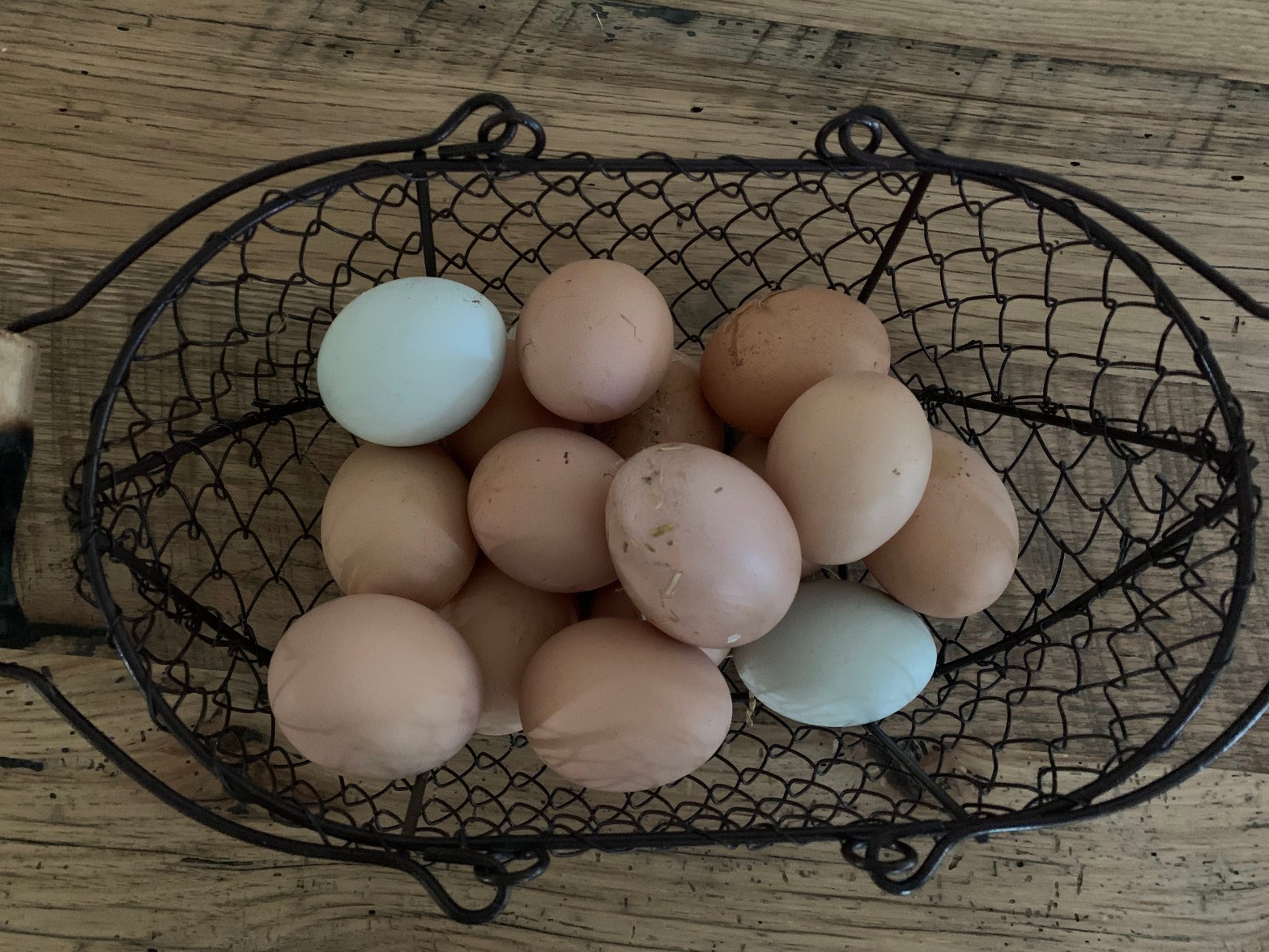
Last fall, October 2023, we got another batch of chickens. They were supposed to be breeds that are good for egg laying. We never had fall chicks before. They should be laying eggs any day now. We had a drought where we got no eggs in the fall and winter, which is normal when the hens molt. However, this drought was longer than normal. We are finally collecting about seven eggs a day and are expecting more soon.
We first decided to have chickens on the farm in 2020. We ordered our first group of chicks from a local hatchery and picked them up on the day they hatched. We got nine chicks in our first flock. We named them all after herbs and spices (onion powder, chili pepper, and mustard, for example). They were all supposed to be hens but we found out, after hearing a some crowing, that we had two roosters. They were Papriko (originally Paprika) and Cinnamon Stick (originally Cinnamon). We kept them in a pet tent in our utility room while they grew when the barn was being finished. We were all working from home due to the pandemic and would take “chicken breaks” to sit together and hold them. We tried to handle each chick daily so they would be used to us. We also made the same sound each time we put them away and gave them treats so they would be used to coming into the barn each night when they heard the sound. When the barn was finished and we were ready to take them out to their new coop, I was worried. I had read that the chicks would have gotten used to hearing my voice first thing in the morning and would be unsettled in their new space in the barn for the first few nights, so my husband and I spent the first night in the newly finished barn on an air mattress. The chicks were just fine, of course, but it made me feel better to help “them” adjust.
One day, a few weeks into our new routine, one of the chickens who enjoyed a snuggle the most, Chili Pepper, became ill. She was lethargic, not eating, and had a big lump on her belly that felt like a hot water bottle. I tried the things I knew to help her. When those didn’t work we took her to a local veterinary services chain. They took her into the office, as it was the pandemic, so we had to wait in the car. They called us in the car and said they couldn’t tell what was wrong with her. They said that they could do (expensive) X-rays to see if there was a blockage, but if there was a blockage they would need to consider surgery. They said that anesthesia wasn’t an exact science for birds and she still may die. They told us that there wasn’t anything else they could do, but that they could euthanize her if we wanted. I wept. She was the sweetest bird! I decided to bring her home and if she passed away, she would do it among her “sisters” that she had grown with. I just happened to send an Instagram message to a friend I knew and told her about the situation. She asked if I had tried yogurt or apple cider vinegar. I had not, but it couldn’t hurt! We only had blueberry Greek yogurt, so I gave some to her and she gulped it up! She ate some of that for the next few meals and within 48 hours she was her happy self! Chili was eating and drinking, moving around as normal! I was so relieved. She has been the best farm ambassador when people come for the farm tour or just to visit. She will tug on a shirt sleeve as if to say, “Hey, pick me up!” and once in someone’s arms, she will bury her head into the crook of your neck. She is a favorite.
Stay tuned to read how we went from seven hens and two roosters to 26 hens and 4 roosters!
Welcome to our first Dragonfly Farm Newsletter! I am so glad you signed up in our farmstand notebook to let us know you are interested in the latest news from here. We have been working on a new website: https://dragonflyfarm.co/ where I will try to keep up with the latest information. We are also trying to get Instagram to give the farm an account. We will let you know when we finally have that accepted and up and running.
I have some sad news to share. We lost our hive. We had one hive going into the winter. We had fed the bees and tucked them in by wrapping a “donut” of insulation around the middle section of the hive. We checked on them right before the cold weather snap and they were alive and well. Then, they were all dead when we checked on them after the cold snap. It was a sad sight that brought tears to my eyes. We still aren’t certain of the cause of the loss. Our bee mentor/beekeeper guide said the formation they were in when they died looked like they were hungry, but the frames were heavy with honey. We are planning on getting two nucleus colonies, or “nucs” to start in the spring. We will keep you posted!
We have begun the seed-starting process. We started some spinach, carrots, and lettuce inside our hoop house. They should be ready in a month to a month and a half. We have ranunculus and tulips growing and poking through the soil in the hoop, as well. This week we will plant our first round of flowers in trays in our basement. They will be under grow lights and some on heating mats. I haven’t had more than one kind be successful at a time, so I am looking forward to a new attempt this year!
Our farm got some new members this fall and winter! We purchased 8 chicks in the fall. They were all supposed to be hens, but one of them turned out to be our fourth rooster. Almost all of the chickens here on Dragonfly Farm are named after herbs and spices. We have Chili, Sesame, Papriko (he was Paprika until we found out he was a rooster), Rosemary, and Poppy, to name a few. We have thirty chickens now. We are looking forward to receiving eggs from our well-loved hens, including the newest 7!
The other new residents are two mini horses. We went to a Christmas tree farm to cut our tree and they had mini horses. We interacted with them and gave them pets, and then my husband asked the owner if they had mini horses for sale. They did, indeed, and we went back on at a further date to gather more details. The girls, Lucy and Naomi, were brought to their new home, Dragonfly Farm, in December and have been part of our menagerie since. We are up to 42 animals now! The goats aren’t fond of the new friends, just yet, but we are hoping we get to a place of harmony amongst the animals soon!
Please keep in touch and we will keep you updated on the latest, as well as let you know when our social media account is up and running!
Thank you for your interest in and enjoyment of our farm!
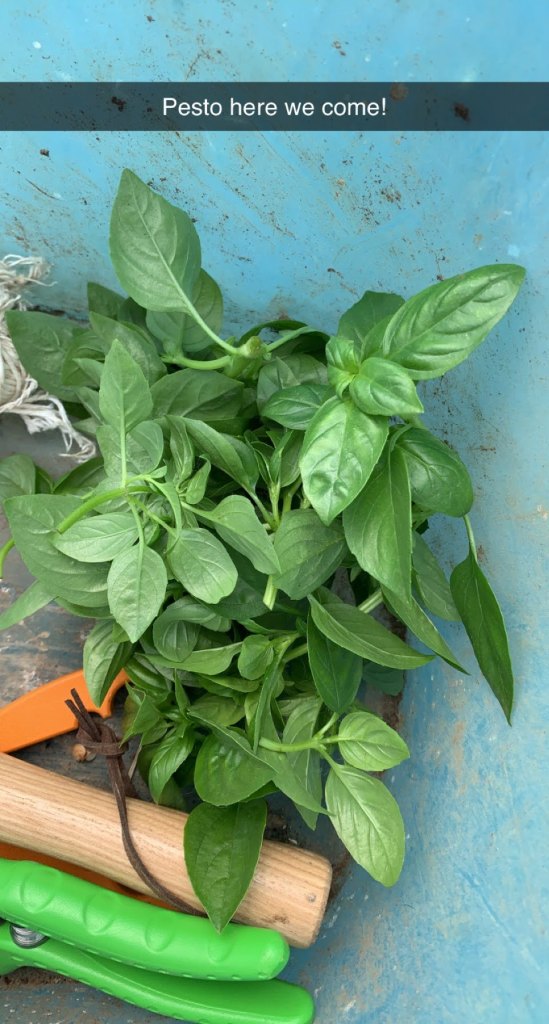
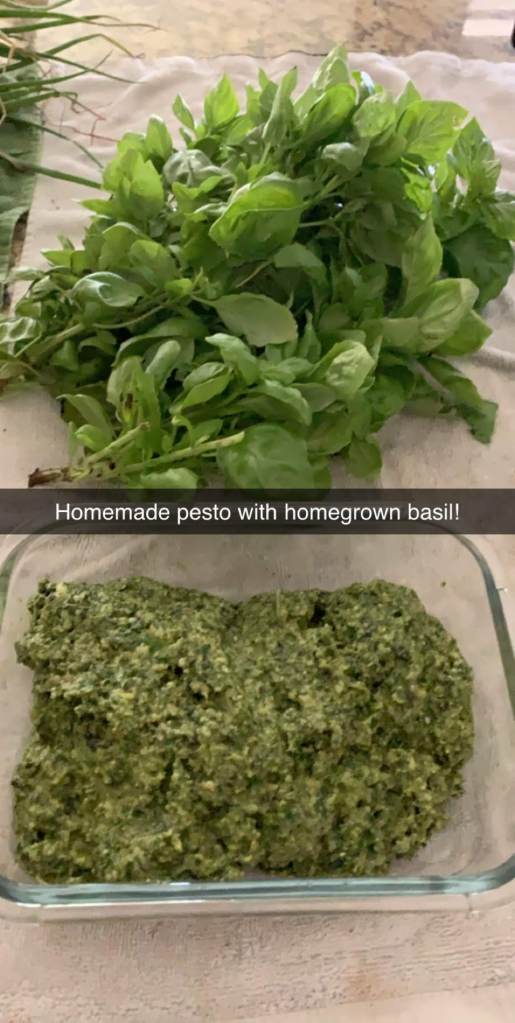
We grow a lot of herbs on the farm, one of them being basil. We love to use it to make pesto. We normally use this recipe from Simply Recipes. It’s simple and delicious! Recently the local grocery stores were out of pine nuts so we substituted walnuts and it was just as flavorful. We also sometimes add spinach with the basil. We sometimes add more garlic, as well, and I have seen in their comment section a comment referring to trying roasted garlic in the recipe, which I haven’t tried, yet, but it sounds like it would taste good, too!
Fresh Basil Pesto
PREP TIME 15 mins
TOTAL TIME 15 mins
SERVINGS 16 servings
YIELD 1 cup
Basil pesto darkens when exposed to air. To store, cover tightly with plastic wrap, making sure the plastic is touching the top of the pesto and not allowing the pesto to have contact with air. The pesto sauce will stay greener longer that way.
Ingredients
2 cups fresh basil leaves, packed (can sub half the basil leaves with baby spinach)
1/2 cup freshly grated Romano or Parmesan cheese (about 2 ounces)
1/2 cup extra virgin olive oil
1/3 cup pine nuts (can sub chopped walnuts)
3 cloves garlic, minced (about 1 tablespoon)
1/4 teaspoon salt, or more to taste
1/8 teaspoon freshly ground black pepper, or more to taste
Pulse the basil and pine nuts:
Place the basil leaves and pine nuts into the bowl of a food processor and pulse several times.
Add the garlic and cheese:
Add the garlic and Parmesan or Romano cheese and pulse several times more. Scrape down the sides of the food processor with a rubber spatula.
Slowly pour in the olive oil:
While the food processor is running, slowly add the olive oil in a steady small stream. Adding the olive oil slowly while the processor is running will help it emulsify and help keep the olive oil from separating. Occasionally, stop to scrape down the sides of the food processor.
Season the pesto sauce:
Add salt and freshly ground black pepper to taste.
Toss with pasta for a quick sauce, dollop over baked potatoes, or spread onto crackers or toasted slices of bread.
People often ask me if I always wanted to be a farmer/own a farm/have farm animals. My answer is always no. I had dreams of living in a neighborhood with family and dogs. My husband and I have lived near our current farm for years and walked and ran by the property, often saying that if it ever went up for sale we would buy it. We loved its small amount of land, its pond, and the large, old trees. However, the barn and animals never factored into the daydream. One day we were about to head out of town for a trip, and we saw the for sale sign. We called our realtor and asked to see the property, putting an offer on it electronically as we drove on our trip that evening.
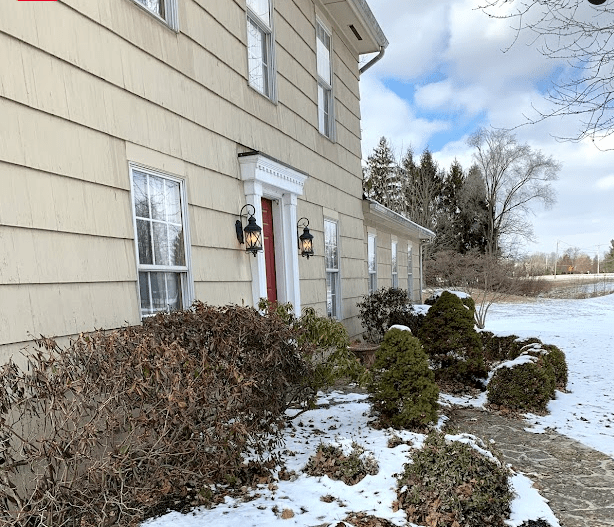
There was a house on the property, built in the 1830s, and our original plan was to keep it but to have it renovated. When we returned from our trip and heard that the house was ours, we started the demo ourselves and scheduled to meet several renovation companies. We found, after several meetings, that it would take a multi-year, expensive plan to get the house where we wanted it, so we tore it down. During excavation, we found that there were more issues we hadn’t even planned on that would have increased our price like those HGTV shows where they call the owners with “more bad news”… like the 7-foot, uncapped well full of water right under the living room floor.
We met with our builder, repositioned the house so our back windows looked out onto our pond, and the building began. We put up a garden and walked from our then house which was only .25 miles away to work on it. We had someone come to replace the siding and pour a concrete floor in the barn on the property but later learned it was in terrible shape and it, too, was knocked down and replaced. There is still one garage building on the property that was here when we purchased it. The barn we had built is bigger and has insulation and water, which are nice improvements.
Well, once you build a nice barn, you have to fill it, right? We moved into the farm in February 2020, right before the pandemic, and proceeded to get our first 9 chicks. Our daughter had come home from college to attend class online due to the pandemic and my husband and I were also working from home. We three attended “chicken breaks” throughout the day so that batch was handled quite a bit and it shows in their interactions with people.
That summer we added our first four goats to the family, followed by a cat. We love it, here, with so much nature around us, but where we are still so close to neighborhoods and other creature comforts we appreciate. It is definitely home.



 Dragonfly Farm