
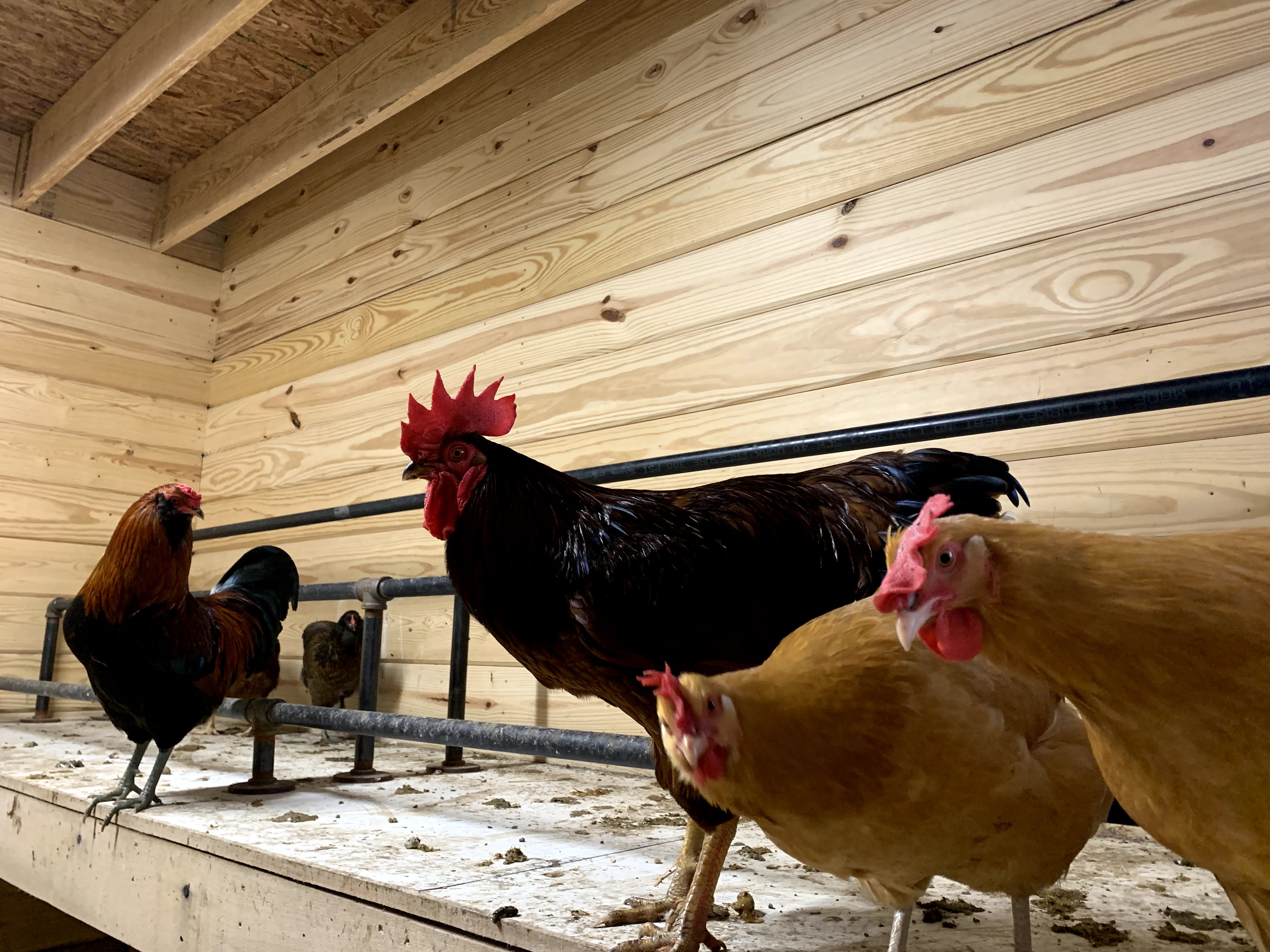
We first decided to have chickens on the farm in 2020. We ordered our first group of chicks from a local hatchery and picked them up on the day they hatched. We got nine chicks in our first flock. We named them all after herbs and spices (onion powder, chili pepper, and mustard, for example). They were all supposed to be hens but we found out, after hearing a some crowing, that we had two roosters. They were Papriko (originally Paprika) and Cinnamon Stick (originally Cinnamon). We kept them in a pet tent in our utility room while they grew when the barn was being finished. We were all working from home due to the pandemic and would take “chicken breaks” to sit together and hold them. We tried to handle each chick daily so they would be used to us. We also made the same sound each time we put them away and gave them treats so they would be used to coming into the barn each night when they heard the sound. When the barn was finished and we were ready to take them out to their new coop, I was worried. I had read that the chicks would have gotten used to hearing my voice first thing in the morning and would be unsettled in their new space in the barn for the first few nights, so my husband and I spent the first night in the newly finished barn on an air mattress. The chicks were just fine, of course, but it made me feel better to help “them” adjust.
One day, a few weeks into our new routine, one of the chickens who enjoyed a snuggle the most, Chili Pepper, became ill. She was lethargic, not eating, and had a big lump on her belly that felt like a hot water bottle. I tried the things I knew to help her. When those didn’t work we took her to a local veterinary services chain. They took her into the office, as it was the pandemic, so we had to wait in the car. They called us in the car and said they couldn’t tell what was wrong with her. They said that they could do (expensive) X-rays to see if there was a blockage, but if there was a blockage they would need to consider surgery. They said that anesthesia wasn’t an exact science for birds and she still may die. They told us that there wasn’t anything else they could do, but that they could euthanize her if we wanted. I wept. She was the sweetest bird! I decided to bring her home and if she passed away, she would do it among her “sisters” that she had grown with. I just happened to send an Instagram message to a friend I knew and told her about the situation. She asked if I had tried yogurt or apple cider vinegar. I had not, but it couldn’t hurt! We only had blueberry Greek yogurt, so I gave some to her and she gulped it up! She ate some of that for the next few meals and within 48 hours she was her happy self! Chili was eating and drinking, moving around as normal! I was so relieved. She has been the best farm ambassador when people come for the farm tour or just to visit. She will tug on a shirt sleeve as if to say, “Hey, pick me up!” and once in someone’s arms, she will bury her head into the crook of your neck. She is a favorite.
Stay tuned to read how we went from seven hens and two roosters to 26 hens and 4 roosters!
 Dragonfly Farm